
November 4, 2026
Physician Finds Supportive, Expert Care and Community at Affiliated Oncologists After Breast Cancer Diagnosis
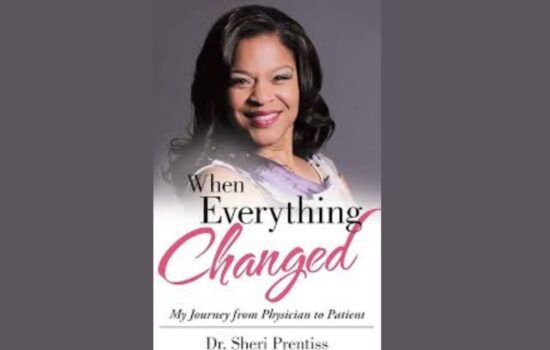
Dr. Sheri Prentiss knew she wanted a life in medicine from a young age. In late 2008, she had fulfilled that childhood dream with a prominent, accomplished career. While initially pursuing a neurology residency, she switched gears to occupational and environmental medicine after the birth of her second child—a career move she found gave her a balance between her professional and personal life. She served in several medical director positions before taking on the role of program medical director for Advocate Health’s occupational and employee health department.
While she was experiencing success in her career, she says there were several stressors demanding her attention in her personal life. Recently divorced, she was navigating a co-parenting relationship, as well as taking care of her mother, who was terminally ill. She had also been supporting a close friend and colleague through cancer treatment.
“Professionally, things were great. Personally, I was focused on adjusting,” Dr. Prentiss said. "Then I found a lump in my breast, and that changed everything for me.”
Breast Cancer Diagnosis and Taking Off the Physician Hat
Dr. Prentiss found a mass in her breast during a self-exam on October 1, 2008. She was in the process of helping her mother transfer to hospice care, and her ex-husband had called to check in.
“I remember doing my breast self-exam while we were on the phone, just to save time,” she said. “I told him that I had just found a lump, and I’d have to call him back. I just knew it was cancer when I felt it.”
Dr. Prentiss had recently had her annual mammogram, which came back with normal results. While she had been more drained and tired than usual, she had attributed it to stress and a busy schedule. Feeling a lump, however, immediately spurred her into action.
Her recent experience with her friend’s cancer journey gave her a place to start with her own breast cancer diagnosis. She contacted physicians she was familiar with and trusted, and immediately was scheduled for a biopsy, which came back positive.
“As a physician turned patient, I understood the process because I had walked this journey with my friend,” she said. “I immediately crossed a line I never expected to cross; I went from physician to patient. I took off my doctor hat and trusted my care to my physicians.”
Beginning Treatment with Dr. Pandya at Affiliated Oncologists
After undergoing surgery to remove as much of the breast cancer as possible, Dr. Prentiss was told she would need chemo and radiation and was referred to Dr. Mauna Pandya at Affiliated Oncologists.
“Dr. Pandya is the kind of physician who watches how a patient leans in or leans back, and she works accordingly,” Dr. Prentiss said. “She doesn’t mind giving a patient a hug if the patient reaches out for comfort. I want a physician that takes time with me, and she never made me feel rushed. She always made me feel heard, always made me feel seen.”
Dr. Prentiss experienced several complications during her breast cancer treatment, including health issues that led to her pulling out of clinical trials. Throughout the ups and downs, she said Dr. Pandya and her care team were a constant source of comfort and encouragement.
“At one point, my work-up required a bone marrow biopsy, which was extremely painful,” she said. “Dr. Pandya was so encouraging throughout the entire process. You could see that she was truly empathizing with my pain. I can’t imagine going through what I was going through without her.”
Those feelings extend to the entire team at Affiliated Oncologists.
“They make you feel seen, heard, and valued from the moment you walk through the door,” she said. “They communicate clearly, treat you with genuine kindness, and ensure you understand what’s happening throughout your care. It’s evident that they’ve been intentional about surrounding patients with the right people.”
Survivorship, Lymphedema Advocacy, and Follow-Up Care
Dr. Prentiss completed cancer treatment and has since watched her children graduate from college and graduate school, establish their careers, and begin building families of their own.
In 2010, Dr. Prentiss became the national spokesperson for the Susan G. Komen 3-Day, serving in that role for six years before becoming the organization's first National Ambassador for Health Equity, a position she held for an additional two years.
After treatment, she was diagnosed with lymphedema. While talking to other survivors about their own experiences with lymphedema after breast cancer, she became a passionate advocate for awareness of the condition. In 2017, she founded the Live Today Foundation, a 501c3 nonprofit organization to provide free compression garments to eligible financially under-resourced cancer patients and survivors living with lymphedema.
While she currently lives in Florida, she continues to fly annually to see Dr. Pandya at Affiliated Oncologists for her follow-up care, saying she plans to keep doing so indefinitely and will never miss an appointment.
“I don’t want to trust my care to anyone else. Any complaint I have, she listens. Nothing is discounted. She always does her research and tries her best to alleviate my symptoms and help me figure out what’s going on,” Dr. Prentiss said. “I feel just as loved and cared for today as I did the first time I walked into her office.”
Dr. Prentiss encourages anyone newly diagnosed with breast cancer to recognize that their healthcare team is there to guide and support them through a challenging journey, but emphasizes that patients must also be empowered to advocate for themselves. Ask questions, voice concerns, and never dismiss a symptom as too small or insignificant to mention. Every patient deserves to be heard, informed, and actively involved in decisions about their care. She urges patients to think beyond treatment and consider the quality of life they want to experience afterward, reminding them that survivorship and quality of life matter just as much as survival itself. Above all, she wants patients to remember that there is life beyond breast cancer and that they do not have to navigate the journey alone. Their family, friends, and healthcare team can all play an important role in supporting them along the way.
“You don't have to walk this journey alone,” she said. “You don't have to be strong for everyone else while silently carrying the weight of your own fears. Give yourself permission to be vulnerable, to ask for help, and to find the people and spaces where you feel safe enough to simply be yourself. Strength isn't always about what you can endure on your own. Sometimes, it's having the courage to let someone walk beside you.”
Categories: General Cancer, Breast Cancer